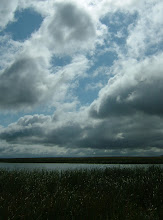
Where did Anson Johnson and Jay le Rondein and such modern architects get their inspiration for the low flat topped horizontally oriented style that they are so well known for? In 1947, a group of American architectural students took a southern European field trip that included Andelania, an island off the coast of Spain. This large island of volcanic mountains had only flat roofs on their homes and offices and buildings. The building codes of the independent island state cited concerns about rain and snow runoff harming people outside the building and undermining the foundations of the buildings by dumping too much precipitation too close to the building itself, so the flat topped roofs were slightly concave to collect the rain water and snow melt water and channel it through plumbing to be deposited far from the building. In fact, the towns' first sewer systems were to carry this roof rain water away from the buildings and were only later copied to carry waste water away from homes via underground plumbing systems. In early times, the rain water went through underground piping while household sewage was carried out of town in barrels and dumped. Later, a piggyback system was build in a layer on top of the rain drainage system to carry the household waste. The architecture students of the '40s liked the aesthetics of the horizontal flatness of the buildings an the layers of the multistory buildings. They found it to be an interesting contrast to the sloping and vertical nature of the surrounding cliffs and mountains of the island, and carried the images back home to their American architectural studios where it played in a rebellious and innovative way against the overdone steeply pitched roofs of the Victorian and Gothic and Colonial Revival houses popular at the time. The completely flat roof did present problems of excessive snow accumulation, so the style quickly evolved into the low pitched roof of the suburban ranch style, with just enough pitch to shed snow but not so much as to echo the steepness of the traditional residential steeply peaked houses so popular then.
Only when architectural historians visited the island in later years was the true origin of the flat roof uncovered. In much earlier historic times, the population of the island worshipped Vol, a god that was thought to reside inside the volcanoes. When Vol was angry, legend said, the earth would shake and tremble. If Vol got angrier still, a dome of one of the island mountains would begin to swell and bulge. If Vol became even angrier, ash and fire and lava would spew from the dome and cover fields and roads and houses and towns and kill wildlife and livestock and people. At the first sign of displeasure, the people would hold meetings and attempt to figure out who among them was displeasing the volcano god. If someone had plowed a field the wrong direction, and had pointed the rows directly toward the volcano god, it was decided that Vol was angry that the person did it to mock him, and that person could be declared the source of the trouble and killed at the base of the rumbling dome. These 'trials' escalated as the volcanic activity escalated, with sometimes whole villages sacrificed to appease the god. In early times, shelters consisted mainly of a ramada type architecture of post supporting beams that supported thatching of reeds and rushes and grasses to shed rain. One village higher on the slopes, where snowfall was prevalent, had adapted a peaked shape to their roofs to more effectively shed the snow. This shape for houses was becoming popular when the volcano of that peak began to show activity. The usual violators were sought out and sacrificed but the volcano erupted one day in late summer anyway. The first thing to light on fire from the burning cinders blasted from the volcano were the peaked thatched roofs. Coincidentally, as the lava flowed down from the dome above, this city was engulfed and a nearby village that had not adopted the peaked roofs was spared. A swelling in the land above the village diverted lava flow to either direction around it, but it did appear from the village as though some guardian hand might have caused the flow to go to either side. This was the origin of the prohibition against peaked roofs. They were for many centuries seen to offend the volcano god because they were thought to be an image of his shape and therefore a mockery of the god himself. Eventually, when Christian missionaries in the 1890s converted the Vol worshippers to Catholicism, the beliefs in Vol and the sacrifices to him were ceased. But still, when the village wrote up its 'modern' building code ordinances, scientific reasons were offered up for various dangers and disadvantages of sloped roofs, and flat roofs were mandated by law. To this date, the cities and the state still mandate flat roofs, and manage to find various engineering data sets which they cite in order to support this preference.
It is a certainly good thing that religion and ancient myth are never allowed to enter into the laws of the obviously much more advanced and civilized country that is the United States of America.
Showing posts with label F-I-C-T-I-O-N. Show all posts
Showing posts with label F-I-C-T-I-O-N. Show all posts
Tuesday, March 23, 2010

Red Beads
 Something landed on the branch of the star magnolia just outside my window, on a brisk March day when the fat and furry bud cases were barely cracked open to reveal white petals within. The movement of settling wings in the periphery of my vision is what caught my attention. I turned my chair to see it was him, there on my branch, keeping his balance by the shifting of his tail feathers. In his beak, he held a strand of red beads, transparent glass, and they seemed to glow from within in the low light of the afternoon sun. He looked at me directly, first with one eye, then the other. I left my desk, grabbed my jacket off the hook by the door, and went outside. He hopped down branch to branch until he was at my shoulder, where he looked at me again, with one eye at a time, twisting his neck from side to side, a habit he knew annoyed me.
"I thought you weren't coming back," I said. He pushed his beak, still holding the beads, toward me. I cupped my hands under them as he let them drop. He shook his head and said, "I lied. You know I always do that." "I forget," I answered and walked toward the back yard. "AWWWW," he called, "Don't go away!" I kept walking. He tried to take flight from the tree but its branches got in the way of his wing feathers. He was forced to drop to the ground, waddle out from under it along the path to more open ground, where he could take flight. He flew out to beyond where I was headed, then circled. "You're mad I came back?" he asked in a pass near my head that made me instinctively duck and swerve a little, which only served to aggravate me further.
"I'm mad you left. What do you think?" I answered, turning away. "You know I can't live in a house and you won't live in a tree. Do we have to go over all that again?" he snapped. "Where did you steal the beads?" I asked, hoping to offend him. "Bought them. Mexico." he answered. "So you shifted to buy me beads?" I couldn't decide if I was touched or angered. "Fly with me," he demanded.
 "No." I draped the beads over the branch of a witch hazel tree, longing to pause to smell the curled yellow blossoms. Instead, I turned and walked toward the house, feeling him fly past my head once and again as he made passes through the yard. I went inside and closed the door, leaning back against it for a second. I heard a loud long "Cah-aaaaawwwww" from high in the sky, then the branch by the window scraped the siding when he landed. I did not look out the window. I opened the basement door, pulled the chain to turn on the light, and stepped down into the musky space where I could not look out windows to let him catch my eye. I folded laundry, sheets first, drawing my arms wide to pull the wrinkles out, smoothing the fabric with each fold, then the towels, snapping each one crisply and creasing it slowly and firmly, perfect quarters, perfect thirds, a perfect stack. I looked around for more to do, but things were in order. I climbed the steps, my feet heavy. Silence. I paused and took a deep breath before I opened the back door. Only the beads were there, draped over the outside knob, swinging against the white paint as my hand shook on the inner knob.
 I scanned the sky, the bare high branches of the trees along the property line. I pulled the shining beads from the doorknob. There were many shapes and graduated sizes, a carved glass flower in the center, leaf shaped beads to each side. It was beautiful, perfect. The glass beads felt cool in my hands. I held them to my heart. I could feel it pounding: Was he gone for good this time?
Thursday, October 15, 2009
Words and Photographs in Books - Fiction
We drove north out of town, following the directions they gave us, and stopped at the side of the road where they said it happened. But we could find no signs. Nothing at all. There were no scraps of paper, no tire marks, no beaten down grass, no broken glass, no burn marks or ashes, no signs of any disturbance or anything unusual at all really.  We picked up a few beer cans and some fast food litter to try to redeem the trip from total pointlessness. We debated a while if we should go back and ask for directions again or if perhaps we'd gotten the crossroads wrong, turned too soon or gone too far. In the end, we decided we didn't have time to try again so we drove away, leaving the tall cottonwoods rustling their leaves along on the far side of the ditch. We wondered aloud and privately if it really ever happened and then forced ourselves to change the subject and stop talking about it as we drove on the our next appointment.
Years later, I was driving that road on the way to visit a friend, when the fenceline cottonwoods rose into my view ahead. The early morning light sent shadows of them crossing the roadway and without meaning to, I slowed down as I neared the spot. And there in the tall ditch grasses, exactly where they'd said it would be, was everything we'd expected to find. The books were there, tumbled in the ditch, some lying open, their pages fluttering in the breeze. Black skid marks on the asphalt lead to tire tracks that flattened the grasses. Broken glass, the smell of gasoline and oil, a burned patch in the grass along the shoulder. Envelopes of guitar strings, business cards, matchbooks, a makeup case, CDs, your sunglasses, and folded roadmaps.
I looked up and down the road, but there were no cars, no other people. I started to gather up the books into a pile when a crow landed on the hood of my truck and two more landed on the center line of the pavement. They cawed and flicked and shook their wings and cocked their heads to stare at me. I looked down and the book in my hand was open to the photo of you, victorious and smiling, a strand of hair blown across your face, standing on the steps of the courthouse. I dropped to my knees and cried as I held the book to my heart. The crows cawed, flapped wings, rose and settled again together in a broken branch of the cottonwood trees.
In the end, I left everything there. I knew if I took more time to gather things up, if I picked up the books and straightened their pages and closed them and stacked them in my truck, that I would be late to see my friend. And what would I do with them, how would I explain them being there? What good could those things do me anyway; what use were they to me now? I drove away, leaving it all there, fluttering in the wind, catching and reflecting the sunlight.
I drove away and as I did, the crows dropped out of the tree and flew along and behind me for a ways before veering off into a valley to dive and tumble with each other until I had to leave sight of them to turn my eyes back to the road.
My friend was waiting on the porch, smiling, with a pitcher of lemonade for us to share and a vase of sparkling yellow roses, fresh with dew and glistening in light reflecting from the white of house walls. We talked a while, laughed, shared stories, joked. We talked about our plans, our hopes. Then I saw it there on the chair between us, your book, open, face down. She saw me looking at it and picked it up, closed it, and slid it onto her lap. She broke the silence that had settled upon us by offering me more lemonade, and we talked a while more, remembered, planned, laughed. Once, we sat silent for a while to watch a coal black cat walk the distance of her driveway, then double back and stalk a grasshopper that was sitting in the gravel. The grasshopper popped high over the cat's head at the last minute and the cat walked on as though nothing had happened. When I got up to leave, she stood to hug me goodbye and I saw that her lap was empty, the book not there. She smiled and walked me to the truck and hugged me once more before I drove away.
I miss you but I am not sure you are really gone.
 We picked up a few beer cans and some fast food litter to try to redeem the trip from total pointlessness. We debated a while if we should go back and ask for directions again or if perhaps we'd gotten the crossroads wrong, turned too soon or gone too far. In the end, we decided we didn't have time to try again so we drove away, leaving the tall cottonwoods rustling their leaves along on the far side of the ditch. We wondered aloud and privately if it really ever happened and then forced ourselves to change the subject and stop talking about it as we drove on the our next appointment.
Years later, I was driving that road on the way to visit a friend, when the fenceline cottonwoods rose into my view ahead. The early morning light sent shadows of them crossing the roadway and without meaning to, I slowed down as I neared the spot. And there in the tall ditch grasses, exactly where they'd said it would be, was everything we'd expected to find. The books were there, tumbled in the ditch, some lying open, their pages fluttering in the breeze. Black skid marks on the asphalt lead to tire tracks that flattened the grasses. Broken glass, the smell of gasoline and oil, a burned patch in the grass along the shoulder. Envelopes of guitar strings, business cards, matchbooks, a makeup case, CDs, your sunglasses, and folded roadmaps.
I looked up and down the road, but there were no cars, no other people. I started to gather up the books into a pile when a crow landed on the hood of my truck and two more landed on the center line of the pavement. They cawed and flicked and shook their wings and cocked their heads to stare at me. I looked down and the book in my hand was open to the photo of you, victorious and smiling, a strand of hair blown across your face, standing on the steps of the courthouse. I dropped to my knees and cried as I held the book to my heart. The crows cawed, flapped wings, rose and settled again together in a broken branch of the cottonwood trees.
In the end, I left everything there. I knew if I took more time to gather things up, if I picked up the books and straightened their pages and closed them and stacked them in my truck, that I would be late to see my friend. And what would I do with them, how would I explain them being there? What good could those things do me anyway; what use were they to me now? I drove away, leaving it all there, fluttering in the wind, catching and reflecting the sunlight.
I drove away and as I did, the crows dropped out of the tree and flew along and behind me for a ways before veering off into a valley to dive and tumble with each other until I had to leave sight of them to turn my eyes back to the road.
My friend was waiting on the porch, smiling, with a pitcher of lemonade for us to share and a vase of sparkling yellow roses, fresh with dew and glistening in light reflecting from the white of house walls. We talked a while, laughed, shared stories, joked. We talked about our plans, our hopes. Then I saw it there on the chair between us, your book, open, face down. She saw me looking at it and picked it up, closed it, and slid it onto her lap. She broke the silence that had settled upon us by offering me more lemonade, and we talked a while more, remembered, planned, laughed. Once, we sat silent for a while to watch a coal black cat walk the distance of her driveway, then double back and stalk a grasshopper that was sitting in the gravel. The grasshopper popped high over the cat's head at the last minute and the cat walked on as though nothing had happened. When I got up to leave, she stood to hug me goodbye and I saw that her lap was empty, the book not there. She smiled and walked me to the truck and hugged me once more before I drove away.
I miss you but I am not sure you are really gone.
Friday, October 2, 2009
Secret Club
 Every day that I was there, these strange flat small yellow people guarded this door. It must be some kind of secret club's meeting room or clubhouse or maybe they just keep their secret club regalia there or maybe it is something darker, but it is difficult to think of small yellow people as capable of dark thoughts and acts. I imagine happy things behind that door, though I know not why they would hesitate to share them with the rest of us. I asked them questions and they refused to answer. If I talked to them too long, the human people in the area gave me looks that indicated to me that they are protective of their flat yellow friends and that they wanted me to respect their privacy. I asked it they minded if I took their picture, and they did not say no, so I took the liberty. But they never did talk to me, so their mission and the nature of what is behind the door they guard remains a mystery.
Tuesday, September 22, 2009
Tour Bus - Fiction
When we were younger and less known, we toured in a bus with our name on every surface along with lots of flash and dancing eye candy, hoping we would be as famous as we thought our bus's paint job made us seem to be. Then, when we were actually famous and well-known and sought after and tired of the attention when we were tired of being 'on' after a show, we started to tour in 2 plain white unadorned buses with heavily tinted windows. These sleek white beasts glide barely noticed through town after town and earn us the quiet our old bodies and brains need to sleep off the adrenaline and then pump it up again for another show in another town. But back when we partied all night on the road in our flashy bus, we were burning ourselves out and not all of us made it out alive. Somewhere on the road between Chicago and Milwaukee on one such trip, one of our bass players took on a bit too much of something or a bit too many of some things together and his heart stopped beating in the second seat of the 5th row. After that, nobody would sit in that seat, or even in that row, really, and there was frequently a disturbance when someone would forget, one of us or some lowly lighting guy or one of the costume girls would plunk down with a beer and the bus would gradually go dead silent as we gaped at him or her. They would remember and leap up or maybe have to be told and pulled into the aisle. One night, we were waiting in a parking lot in one of those big L towns in Kentucky, waiting to find out if the last minute add in some nearby college field house was a go or if we were going to hit the interstate for Georgia instead. We sat around in our funk of uncertainty and someone and someone else got into an argument that lead to people taking sides that lead to someone mentioning the dead bass player's name and that shut us all down. We sat in the gloom staring at the empty seat and each other when finally one of the drummers said "I'm gonna torch that seat," and started pushing and pulling on it. A couple others joined in and only managed to get the arm wrenched akimbo. Jimmie finally got up and skulked through the aisle glaring, which made most of us shut up and sit down. He went to the driver and asked for the toolbox. They went outside and underbins were opened and closed and Jimmie came back with a yellow plastic box. He yanked up the carpet and poked his head around under the seat and one of the sound guys joined him. Pretty soon they had the seat unbolted and 3 or 4 of them were carrying it over the other seats to the door. They set it down a few parking places away. We all sat there stunned for a few seconds before we poured out of the bus and gathered in a circle around the seat. There were a few whispers about how we might be arrested but a couple others were rolling up paper towels from the lavatory and wedging them between the seat and the back and pretty soon, the paper was lit and the flames started to creep. Well, it wasn't as dramatic as we'd hoped, for instead of bursting into wild and brilliant towering roaring flame, it mostly just sizzled as the flames crept around and over and under, melting then actually burning the polycarbons of which it was made.  It took a long time and there were little plumes of black smoke now and then, yet no fire trucks roared up, no police cars with flashing lights zoomed in. Soon it was a twisted framework of angled metal and sinewave curving springs and then it was over. We left the metal remains there on the pavement and trickled back onto the bus as the driver radioed to dispatch for our directions. The spot in the row of seats stayed empty for years, until we got the new white buses, and became the place where the ice chest full of bottled water and yogurt that reflected our cleaner habits was kept. We fondly remember the removal of the seat as more violent, we remember the flames as higher and hotter, we remember cheering and yelling instead of the somber quiet observance that actually took place, and at least some remember the driver cleverly talking our way out of trouble with police or fire officials, but in the end, "the day we burned Eddie's seat" was a turning point for us. We lived cleaner and worked harder and played better music and earned more money. Remember the day we "torched the bus seat"?
 It took a long time and there were little plumes of black smoke now and then, yet no fire trucks roared up, no police cars with flashing lights zoomed in. Soon it was a twisted framework of angled metal and sinewave curving springs and then it was over. We left the metal remains there on the pavement and trickled back onto the bus as the driver radioed to dispatch for our directions. The spot in the row of seats stayed empty for years, until we got the new white buses, and became the place where the ice chest full of bottled water and yogurt that reflected our cleaner habits was kept. We fondly remember the removal of the seat as more violent, we remember the flames as higher and hotter, we remember cheering and yelling instead of the somber quiet observance that actually took place, and at least some remember the driver cleverly talking our way out of trouble with police or fire officials, but in the end, "the day we burned Eddie's seat" was a turning point for us. We lived cleaner and worked harder and played better music and earned more money. Remember the day we "torched the bus seat"?
Friday, March 27, 2009
Getting The Boot

We planned it for months. It started with me complaining about poor service that caused us to almost miss a plane one vacation. Everyone had a story about bad service, delays, employees who just don't care how much this is wrecking your life. It made us want to pull a caper, get them back somehow. One of us had a friend of a friend who worked there. We found out where the cash is stashed and spent some time faking that we were waiting for planes doing recon on the patterns of who came and went and when things were watched and left unwatched. We organized ourselves, assigned roles, took our time, made a plan involving distractions, handoffs, disguises changed for other disguises. We rode in together with plenty of time to have a coffee and get into position. The plan went flawlessly, leaving no need to employ contingency plans or back up options. We had the cash. There was much more there than we had even optimistically anticipated. Our fresh disguises meant we all looked much different on the way out than we had going in and even during the elegantly executed theft. We were going to get away with it. We were cautiously elated on the way down the elevator to the parking garage. Then everything changed for one little detail. We were . . . stunned. The car was booted. Big yellow metal scruffy thing bolted right to the wheel of the car. Stopping us in our tracks. How could this happen? The driver had a few parking tickets from last summer, he sheepishly admitted. We sent one of our party to two terminals over to ditch the cash and change to yet another disguise just in case. While we called the police to pay the tickets and the debooting fee with our own credit cards. We left the garage, having pulled off a successful revenge caper but . . . instead of richer in the wallet, a little poorer than the day before, all because of the boot.
Wednesday, February 11, 2009
Kitten Fighting in Chicago
My son and his friends needed a ride to the kitten fights in downtown Chicago, so I agreed to drive.

 You could tell we were in the right place, due to all the people with their shoe boxes with the airholes.
 We got there early,
  so the kids left me with their kittens while they found a bite to eat.
  The line was long for check in, but that was an excellent chance to meet people and there were carts to hold your kitten carriers if you needed them. After check in and number and match rotation assignments,
  rules were explained at the fighting cages in the auditorium.
  Modern technology allows odds to be quickly calculated on each kitten as various data points are entered into computers. You can enter your smaller bets into automated machines that pay out in coins when you read your card in after a fight round. For fun, I put $2 on my son's kitten and won $8.75.
 Most people treat their breeding cats and kittens well, but there is some cruelty, just like in other fighting and racing sports. Sometimes, the losing kittens get abandoned like these on cafeteria table or this poor one left in the garbage. It was an exciting evening in the Windy City!


 You could tell we were in the right place, due to all the people with their shoe boxes with the airholes.
 We got there early,
  so the kids left me with their kittens while they found a bite to eat.
  The line was long for check in, but that was an excellent chance to meet people and there were carts to hold your kitten carriers if you needed them. After check in and number and match rotation assignments,
  rules were explained at the fighting cages in the auditorium.
  Modern technology allows odds to be quickly calculated on each kitten as various data points are entered into computers. You can enter your smaller bets into automated machines that pay out in coins when you read your card in after a fight round. For fun, I put $2 on my son's kitten and won $8.75.
 Most people treat their breeding cats and kittens well, but there is some cruelty, just like in other fighting and racing sports. Sometimes, the losing kittens get abandoned like these on cafeteria table or this poor one left in the garbage. It was an exciting evening in the Windy City!
Subscribe to:
Comments (Atom)