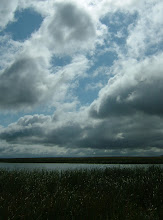
Some have kindly suggested that the loss of the camera frees me to enjoy the experience of paddling, to enjoy my hike in the woods, to enjoy the views and the flowers for their pure beauty instead of their potential as a photographic image, to experience the experience without the obligation to photograph.
While I appreciate the friendly efforts to console and cheer me, I cannot really relate to that advice.
To me, part of the joy of nature IS the joy of capturing it in a photograph. To me, there is joy in seeing a beautiful scene and in the process of deciding to frame just a certain part of it to convey a specific message. When you see, you see whole panoramas, you see objects in their situation and in their relationship to all the things around them, but in making an art image, you must edit out much of that and make a conscious choice of what to include and what to exclude. Those decisions determine what message the viewer will take away from the art. Sometimes, there is more than one message, such as the beauty of an individual tree in fall foliage, the beauty of that tree surrounded by others of different shape and color, the separate beauty of the relationship of the reddening leaves to the red rock that gives our Lake Redstone its name, the shape of the individual leaf, or even the vein pattern on part of that leaf. Sometimes, the plant covered in flower is one message and the individual flower with pollen drifted onto its leaves is another and the visiting bee, with its leg pollen sacks stuffed to overflowing is yet another. Ferns say one thing from this angle with the leaf litter under the fronds and another thing from another angle where they rise up to the sky. Lit from behind, the leaf is a glowing bright green that stuns while photographed from the same side as the light source presents a more solid earthy sheen to the surface. Photographing the nature is a way to look at it more deeply, in more detail, to explore the relationships among the parts of the natural world, and to enjoy far more about it than would be seen at first glance. Photographing, or rather the looking and the deciding what message to convey, make nature a richer experience for me and allow me to see more deeply into the relationships and more precisely into the details. Quick, how many lobes on a maple leaf? What is the back side of a white oak leaf like? Where are the legs attached to a bee's body? In taking the photographs and viewing them later, these sorts of things can be studied and learned.
Photography to me is NOT an obligation but a joy, and a way in which I experience more fully the joy that is out there in the world. It is also a reason to linger. Someone might think me a kook if I just stopped and lingered too long in front of their house to look at their magnolia tree buds or their rose shrub thorns quite closely, but if I have a camera in hand, I can inspect and peek and stare and study and no one calls the police or yells at me or send their dog after me. They just smile at the crazy camera lady and leave me be to my joyful soaking in of the details of the world.
And then there is the sharing it with you. I NEED those images to show to my kids and to my spouse and to my mom and to my sister, to email around to friends. to post on this blog, to post on Facebook, to share my story. "I went for a paddle today" is some news, yes, but accompanied with a dozen of the finest shots, it makes other people smile a little bit and hopefully inspires them to get outdoors for a paddle or a walk on a trail or even just around their neighborhood, and maybe the pictures of the things closeup makes them walk a little slower and look a little harder and notice things of beauty that might have been missed. Maybe it makes them love nature a little bit more and support the conservation efforts of some local organization or vote for the candidate who has a 'green' record.
A walk or a paddle with no camera is just me alone, but with a camera, I bring you all along and share it with you in that little way and it is not just me alone anymore but all of us loving nature and our surroundings together. Yeah, it really it that big. I need my camera!
Showing posts with label observation skills. Show all posts
Showing posts with label observation skills. Show all posts
Monday, April 26, 2010

Wednesday, April 1, 2009
Kids Appreciating Art
 I love watching people but I especially love watching kids learn! Whatever the assignment these kids had been given, it was a mighty good one, because it set them to looking deeply at a single painting for a long long time. We too often look at each thing for a brief few seconds before moving on the next, sort of check list tourism, "Yep, been there, saw that", without really getting much "learnin'" from the experience. It is better to see a few things deeply and gather detail and meaning and layers of meaning from them than to see the surface of a many lot of things.
 Whatever assignment these kids' good teacher had given them, these kids were learning how to appreciate art in a wonderful way that will serve them beyond this day of visiting the art museum on a field trip.
Friday, March 27, 2009
Tastes Like Chicken
If you know what you are doing, you can expand your appreciation of nature to the sense of taste.  This plant, for example, tastes like chicken. That is a lie. It really tastes like lemon. It is a plant called fragrant sumac (Rhus aromatica) which is a shrub about 5 or 6 feet tall and as wide or wider. Recently a dware version has been introduced called Gro Low sumac (Rhus aromatica 'Gro Low') that is only knee high and spread about 8 feet wide.
 These plants are closely related to the more commonly know small trees, staghorn sumac (Rhus typhinia) and smooth sumac (Rhus glabra). Sumacs are plants of the prairie and savanna, native to regions where oak savanna occurs, where they frequented the edge of the shade made by the mighty bur oak trees. The berries of all these sumacs have a sticky coating on them that tastes sour and lemony.
 You can put them in your mouth to suck the flavor off, you can touch the sticky with your fingers and lick the lemon off your fingers, or you can soak the seeds in water to make delicious 'lemonade' drink. The flavor is brightest and strongest when the berries are fresh in summer, but even into winter, the dried seeds still have some lemony goodness that can be soaked out. The later you use them, the more likely you are to need to strain out some bits of dried plant parts, but the flavor is still worth the work! Get out there and taste some nature!
Note: Added photo of staghorn sumac seed heads on 4-06-09. When I stopped the car to take the photo, there was a squirrel hanging onto one of the seed heads nibbling away at the seed coating! Must be plenty of flavor left even in April!
 This plant, for example, tastes like chicken. That is a lie. It really tastes like lemon. It is a plant called fragrant sumac (Rhus aromatica) which is a shrub about 5 or 6 feet tall and as wide or wider. Recently a dware version has been introduced called Gro Low sumac (Rhus aromatica 'Gro Low') that is only knee high and spread about 8 feet wide.
 These plants are closely related to the more commonly know small trees, staghorn sumac (Rhus typhinia) and smooth sumac (Rhus glabra). Sumacs are plants of the prairie and savanna, native to regions where oak savanna occurs, where they frequented the edge of the shade made by the mighty bur oak trees. The berries of all these sumacs have a sticky coating on them that tastes sour and lemony.
 You can put them in your mouth to suck the flavor off, you can touch the sticky with your fingers and lick the lemon off your fingers, or you can soak the seeds in water to make delicious 'lemonade' drink. The flavor is brightest and strongest when the berries are fresh in summer, but even into winter, the dried seeds still have some lemony goodness that can be soaked out. The later you use them, the more likely you are to need to strain out some bits of dried plant parts, but the flavor is still worth the work! Get out there and taste some nature!
Note: Added photo of staghorn sumac seed heads on 4-06-09. When I stopped the car to take the photo, there was a squirrel hanging onto one of the seed heads nibbling away at the seed coating! Must be plenty of flavor left even in April!
Thursday, February 5, 2009
Garfield Park Conservatory
 It's almost too much to take in. There is the structure of it all, the amazing glass houses with their lacey geometric framework and arches and angles. Each room is a little different, inviting compare and contrast and begging you to make your way back around again to see how an element is done in another room. Just the nerve of people to defy the climate and its weather to grow tropical ferns and desert succulents indoors in Chicago is inspiring. It is sort of a celebration of engineering and industry and science and ideas and beauty all wrapped into one destination. And it is warm and humid on a cold day in February. A refuge from the winter and the traffic, a place where the noise is from steam creaking the radiators and hissing through pipes and maybe of children's voices if you are there on the day of a field trip from somewhere. I've been there many times and yet, each visit brings new discoveries and a renewed sense of awe at the diversity and natural beauty of the world we live in, this lovely planet Earth.


Tuesday, October 28, 2008
Brown
 Fall is brilliant colors, red and orange and yellow. But fall is also the tans and browns of the oak leaves, the faded leaves of the maples that have fallen days earlier and lost the sugars that give them their colors, of pine needles and hemlock needles and maple seeds and acorns and their caps and twigs and branches and bark and the soil exposed by the fading ferns. To see the beauty of the brilliant colors is easy.
 But a lingering joy can be had in the more subtle palette of browns and tans, from rich gingery hues to darker drabber almost blacks. Look more closely where at first you see just brown and tell me, how many browns can you see?
Wednesday, September 10, 2008
Road Trip Aesthetics
 Beauty is where you find it, but you'll only find it if you are paying attention to what is around you and open to the possibilities.
Sunday, August 17, 2008
Ways to Hike
One can rush through a hike, ticking off the miles, to call it an achievement. I heard one backpacker at the end of the journey, as we waited for the ferry back, tell a companion that it was a 'knock down' for him, to prove he could do it, to prove he was stronger than the island, that it couldn't get him. I think he viewed his trip a success, but I don't think he had a very good time. His point was to be in control, to do something to the island, to beat it. 


 One can pause to enjoy and wonder, to wander and look and listen and turn over the leaf and look at the flower up close and wait and watch the moose until it leaves the pond.
 One can take the time to use all the senses, to catch your breath and take in the quiet and then to absorb the sounds of the birds and insects and the leaves moving, especially in the aspen forests.
 One can ponder the light coming through the leaves of the ferns and through the canopy overhead. This is my approach, to let the island happen to me. It is a little scary perhaps. to admit that I am not in control and must adapt to the conditions to remain comfortable, but I think it is a more real way to approach such a hike and a more rich way to live in general. It takes a little or a lot longer to cover the miles but I think people who approach it this way have a much better time at it.
 The slow meandering backpacker gets into camp later but has fewer blisters and less chance of injury, and has more pictures and more to write about in their journal in their tent after dark.

Tuesday, May 20, 2008
Not Just Nature
 When the boys were young, we rode the commuter train. This is something we did every so often for fun, with no particular destination. It was interesting to see the towns we knew about for some other reason and note them as the train passed through. It was fun to recognize parks we’d been to or businesses or street intersections. It was intriguing to see the industry and the back doors of businesses and the storage yards, instead of the main streets we drove on or walked.
 It was especially fascinating to see the train switching points and the train yards with the stacked containers and sidelined boxcars. You see, it is my favorite thing to observe and enjoy and appreciate nature, but you can apply your observation skills to the richer enjoyment of any environment, natural or man made. You can, as we did, observe from a passing train or out your car window.
 You can observe the people in the store or at the restaurant. You can observe the structure and display units of the store and the workings of the checkout aisle and watch for glimpses into the goings on in the back rooms where meat is cut and bread is baked and boxes are unpacked.
 At work, you can observe the details of the décor of your boss’s office and your boss’s outfit and your boss’s face. Look at just a door and notice all the parts and textures and colors and shadow and light. By purposefully applying observation skills with all your senses, you can enjoy a more richly detailed life all day every day, indoors or in nature. It’s all there: Notice it!
Monday, May 19, 2008
In the Moment: Here and Now
 One of the greatest factors to successful observation is to learn to stay in the moment. Too often, when our body is in a natural environment, our head is somewhere else, fretting about work or household details or a relationship or some problem or issue. But if your brain is elsewhere occupied on other things, it cannot be fully present observing and analyzing and enjoying nature. It takes practice to push the other things away temporarily and stay in the moment, focusing on what is happening in the here and now,
 to focus on the senses and the present, ignoring past memories and future worries. To block all thoughts of other times and places and things allows the thoughts to be flooded with sensations of the present time and place and frees the brain to sense all the details of the place. This sort of thing requires practice.
 As soon as you notice that you are not in the present, you must forcefully push the other thoughts away and refocus on where you are and what you are experiencing. To do this over and over means that your brain soon fills with the sensations of the present and that in itself helps block out the intruding thoughts. But you must be wary of this effect of other things creeping in and consciously keep yourself present in the current time and current place so that you can absorb its rich details. S
 ometimes for some people, if they just cannot stop thinking of other things, it helps them to take a small notepad along so that they can make note of the concern or issue or thought. They find that once it is written down, they can more easily push it aside, because they know it is safely in the notebook to be retrieved later. We often say we need to ‘get away’ to relax but then we bring it all with us. Daily practice of shutting it out for just a short amount of time and letting in other things from our environment can have benefits far beyond enjoying nature in greater detail. It can have a calming balancing effect on ones whole life.
Saturday, May 17, 2008
Compare and Contrast

Yes, it was an annoying part of college exams, but it is a valid way of understanding things more deeply. Compare and contrast. When you are out for a walk, stop and look at what is to your right for a moment. Then turn to look at what is to the left. Look from one side to the other to find things that are the same on both sides. Then find things that are different. Go back to looking for same things, then unique things. The more times you alternate from one side to the other, the more details about the scene you will absorb. The more deeply you will understand the scene. You might think that you are in the midst of a pretty uniform woodland area,  but maybe one side is drier than the other, one side might get more light, the path might restrict spread of plants, so that there really are observable differences. Or you might be in a place where there is a stream on one side and prairie on the other, very different things, but there will still be similarities to be found in those apparently diverse scenes. Try to find differences in two plants of the same species. Try to find similarities in two different species of plants. In a tree and a flowering plant. In a plant and a stone. Comparing and contrasting each to the other helps to expose relationships and dependencies. You can also tease out details by comparing and contrasting the experience via different senses.
 Listen for a while and then look for a while and pay attention to what things you could detect with both senses and what things you could detect with one and not the other. Compare and contrast over time. Observe a scene in as much detail as you can, then take a nap there, and wake up to see what has changed. And make note of your mood at the beginning of your walk and compare and contrast that to your mood at the end of your walk!
 but maybe one side is drier than the other, one side might get more light, the path might restrict spread of plants, so that there really are observable differences. Or you might be in a place where there is a stream on one side and prairie on the other, very different things, but there will still be similarities to be found in those apparently diverse scenes. Try to find differences in two plants of the same species. Try to find similarities in two different species of plants. In a tree and a flowering plant. In a plant and a stone. Comparing and contrasting each to the other helps to expose relationships and dependencies. You can also tease out details by comparing and contrasting the experience via different senses.
 Listen for a while and then look for a while and pay attention to what things you could detect with both senses and what things you could detect with one and not the other. Compare and contrast over time. Observe a scene in as much detail as you can, then take a nap there, and wake up to see what has changed. And make note of your mood at the beginning of your walk and compare and contrast that to your mood at the end of your walk!
Parts Inventory
Take inventory. Instead of just looking at a thing, mentally list its parts and look at each one.  Focus on one single plant then take a deliberate moment to look at where the stem comes from the ground, the stem itself, how the plant is branches, the leaves, the backside of the leaves, the edge of the leaves, the surfaces of the leaves, the buds, where the flower attaches to the stem, the flower petals, the flower center, the pollen, the seeds, and dried or dead plant parts from previous season on the ground.
 Pick out one tree, then look at the bark, the root flare, the size of the branches and whether the branching forks or alternates, the leaves, any seeds still on the tree. At a stream, notice the banks, the plants, the water, the rocks, the bottom under the water, where the soil goes from wet to dry at the edge, anything floating, any life in the water at the very edge. Notice the smell of the water and the soil and the plants. Hear the sound of the water and the birds and the rustle of leaves and your own footsteps. Touch the ground and the dried leaf litter and the water itself. Look at an insect and notice its legs and its body and its head and its mouth and its eyes and its antennae.
 Look at your own hand, the texture of the skin, the lines on the palm, the shape and color of the nails, the veins under the skin, any rings, any scars, calluses, injuries, dirty spots. Look at the face of a loved one. This listing seems time consuming and artificial at first, but like scanning where you move your eyes in a pattern, taking inventory becomes natural with time and practice and enriches your experience many time over.
 Focus on one single plant then take a deliberate moment to look at where the stem comes from the ground, the stem itself, how the plant is branches, the leaves, the backside of the leaves, the edge of the leaves, the surfaces of the leaves, the buds, where the flower attaches to the stem, the flower petals, the flower center, the pollen, the seeds, and dried or dead plant parts from previous season on the ground.
 Pick out one tree, then look at the bark, the root flare, the size of the branches and whether the branching forks or alternates, the leaves, any seeds still on the tree. At a stream, notice the banks, the plants, the water, the rocks, the bottom under the water, where the soil goes from wet to dry at the edge, anything floating, any life in the water at the very edge. Notice the smell of the water and the soil and the plants. Hear the sound of the water and the birds and the rustle of leaves and your own footsteps. Touch the ground and the dried leaf litter and the water itself. Look at an insect and notice its legs and its body and its head and its mouth and its eyes and its antennae.
 Look at your own hand, the texture of the skin, the lines on the palm, the shape and color of the nails, the veins under the skin, any rings, any scars, calluses, injuries, dirty spots. Look at the face of a loved one. This listing seems time consuming and artificial at first, but like scanning where you move your eyes in a pattern, taking inventory becomes natural with time and practice and enriches your experience many time over.
Friday, May 16, 2008
Stop, Sit, Wait
One of the most important ways to see more is to just stay put. Instead of hurrying on your way, stand still, or sit down and stay a while. Sit still and do not move or move only slowly and gradually. You will see changes of light as the sun moves just a little.  You will notice patterns of sun and shadow. You will see changes in movement as the breeze picks up or slows down, or even when it lets up altogether for moments of total calm. Animals and birds will get used to your presence and reenter the area and resume activity. You will see slow moving insects and snakes and reptiles and amphibians moving against the still background. You will see other people enter the area and move on and their effect on the environment. If you are observing wildlife, it is instinctive to all animals to recognize the facial pattern of 2 eyes and a nose/mouth region, so if you close one eye or cover it with a hand, you might disrupt that pattern to wildlife and keep from startling them for longer.
 Watch a single flower on a warm day to see the many kinds of bees and ants and beetles that may come for its nectar. Watch the canopy of a tree to see the various birds that visit and watch for insects crawling or flying around among the leaves. Watch a stream to see what floats or swims or flies along. Sometimes we work too hard to find nature, when a bit of quiet time means that nature will come to us, if we are quiet and patient enough to let it.
 You will notice patterns of sun and shadow. You will see changes in movement as the breeze picks up or slows down, or even when it lets up altogether for moments of total calm. Animals and birds will get used to your presence and reenter the area and resume activity. You will see slow moving insects and snakes and reptiles and amphibians moving against the still background. You will see other people enter the area and move on and their effect on the environment. If you are observing wildlife, it is instinctive to all animals to recognize the facial pattern of 2 eyes and a nose/mouth region, so if you close one eye or cover it with a hand, you might disrupt that pattern to wildlife and keep from startling them for longer.
 Watch a single flower on a warm day to see the many kinds of bees and ants and beetles that may come for its nectar. Watch the canopy of a tree to see the various birds that visit and watch for insects crawling or flying around among the leaves. Watch a stream to see what floats or swims or flies along. Sometimes we work too hard to find nature, when a bit of quiet time means that nature will come to us, if we are quiet and patient enough to let it.
Thursday, May 15, 2008
Four More Senses
Focus on each of your senses one at a time and experience the area with each. This allows you to enjoy the environment as a much more richly dimensional tapestry than just seeing alone. Pause to close your eyes and listen.  You will find that the breeze causes the trees and leaves produce a wide range of sounds and that you can detect the varying speed of the breeze based on those sounds after a very short while. Leaves rustle, branches rub against each other, and trunks creak as they sway. You will hear much more wildlife than you thought present as you tease apart the calls of different kinds of birds and insects and maybe frogs. Turn your head to hear high and low and in each direction. The longer you listen, the more adept you will be at pulling nature sounds from the background of traffic and human made sounds and the animals sounds from the environment sounds.
Do not be afraid to touch things. Pick things up from the ground and feel their temperature, their moistness, their texture. Replace them as you found them. Touch leaves, feel the petals of flowers. My sons pet bumble bees. Hold a rock in your palm and feel its cool.
While you have those things in your hands, engage your nose. Smell the flowers, of course, but smell the leaves, giving them a little rub to release their oils. Smell the earth and the mosses and the damp side of the rock where it touched the ground. Smell the fallen leaves and the crumbling wood of the decaying log.
You can even taste nature with reasonable safety if you do it cautiously and in tiny doses. One way to do this is to rub a thing and then give your finger a tiny lick. You will find that the sap of some leaves have a bitter taste while some are more spicy. You can dip a fingertip in some flowers and actually find the sweet that the bees gather as nectar. Soil and rocks can be salty or sweet or bitter.
We have five senses but mostly we inhabit a world of vision only, so just by engaging the other four senses, we can have a richer experience of the natural world.
 You will find that the breeze causes the trees and leaves produce a wide range of sounds and that you can detect the varying speed of the breeze based on those sounds after a very short while. Leaves rustle, branches rub against each other, and trunks creak as they sway. You will hear much more wildlife than you thought present as you tease apart the calls of different kinds of birds and insects and maybe frogs. Turn your head to hear high and low and in each direction. The longer you listen, the more adept you will be at pulling nature sounds from the background of traffic and human made sounds and the animals sounds from the environment sounds.
Do not be afraid to touch things. Pick things up from the ground and feel their temperature, their moistness, their texture. Replace them as you found them. Touch leaves, feel the petals of flowers. My sons pet bumble bees. Hold a rock in your palm and feel its cool.
While you have those things in your hands, engage your nose.
 Smell the flowers, of course, but smell the leaves, giving them a little rub to release their oils. Smell the earth and the mosses and the damp side of the rock where it touched the ground. Smell the fallen leaves and the crumbling wood of the decaying log.
You can even taste nature with reasonable safety if you do it cautiously and in tiny doses. One way to do this is to rub a thing and then give your finger a tiny lick. You will find that the sap of some leaves have a bitter taste while some are more spicy. You can dip a fingertip in some flowers and actually find the sweet that the bees gather as nectar. Soil and rocks can be salty or sweet or bitter.
We have five senses but mostly we inhabit a world of vision only, so just by engaging the other four senses, we can have a richer experience of the natural world.
Wednesday, May 14, 2008
Change Your Perspective

We see everything from standing eye level when we are on a walk. To see more, you can change your perspective. When seen from a different angle, new details can be observed. By squatting down or even lying on the ground you will see things at the ground level that you never noticed.  While there, turn your head and eyes upward: You will be looking up at things you usually look down on. If you step up on a rock or log every now and then you will be looking down on things you usually see straight on. Get up close to things. Pick things up. If you always take a walk in a certain direction, take it in the opposite direction so you see the scenes in a new order and from a new angle. Looking from a different perspective can show you what you never noticed before.
 While there, turn your head and eyes upward: You will be looking up at things you usually look down on. If you step up on a rock or log every now and then you will be looking down on things you usually see straight on. Get up close to things. Pick things up. If you always take a walk in a certain direction, take it in the opposite direction so you see the scenes in a new order and from a new angle. Looking from a different perspective can show you what you never noticed before.
Tuesday, May 13, 2008
Scanning
 Every scene is rich in detail, but each person has their attention first drawn to some specific thing within the scene and usually then considers the scene to be seen. But there is so much more there than the first thing that grabs your attention. To see more, you can learn to scan. First you have to pause on your journey.
 This will take the motion of your body through the space out of the equation and it will allow you to move your eyes through the scene to take in the details of a time and place.
 You can observe the scene using a variety of scanning patterns. In a natural scene, a good pattern to use is to scan from foreground through the layers to background. You can scan a scene from low to high. You can scan left to right. As you scan, you stop your eyes and really focus on what is there at each little step. The point is to stop your eye in little increments and really notice what is there at each stopping point.
 People tend to always look at the same sort of things. Most keep their eyes on the path for most of a walk and look up occasionally at maybe the canopy of the trees or the forest floor for wildflowers. But if you stop to scan, you sell see the leaf litter and the fallen logs and the stuff growing on the fallen logs and the shelf fungus growing on the trunks of the trees and the nest in the branches of the tree and the clouds beyond the tree.
 All that diversity and variety is there, waiting to be discovered and enjoyed, and it is up to you to change your patterns of looking so that you can see more of what was there all along. Scan your world and discover the delightful details. Remember to work on it in a systematic manner until it becomes habit.
Saturday, May 10, 2008
Seeing and Seeing More
The first I remember giving it any thought was in Ludden Elementary School. We took a test where we looked at a picture and then wrote down things we observed.  The goal was to see the most things in the picture. I did a little better than my classmates and took some pride in that. Doing that little bit better and learning there were techniques for observing appealed to what little competitiveness I had in me.
 It began a lifelong hobby of learning to observe in greater detail and trying to teach others to observe in greater detail when I have the opportunity. So I have learned techniques. And because nature is so important to me, I take the time and effort to apply them to the natural world. When you first start to apply techniques like these, they seemed forced and unnatural. But after going through the steps purposefully, after a while they become part of how you see, part of your personal habit of observation, and it will feel natural.
 The next few posts will cover specific techniques for seeing more. You can find others’ suggestions and ideas for gaining better observation skills, on line and in books, but you must take the time at first to go through the steps to apply the techniques until they do become habit, part of your own unique way of seeing. Yes, greater detail in observation is a gift that some are born with, but it is also a skill that can be learned, developed, and enhanced so that you can enjoy a rich medley of sights, sounds, tactile sensations, and fragrances every time you are surrounded by nature. Get out there and look around!
 The goal was to see the most things in the picture. I did a little better than my classmates and took some pride in that. Doing that little bit better and learning there were techniques for observing appealed to what little competitiveness I had in me.
 It began a lifelong hobby of learning to observe in greater detail and trying to teach others to observe in greater detail when I have the opportunity. So I have learned techniques. And because nature is so important to me, I take the time and effort to apply them to the natural world. When you first start to apply techniques like these, they seemed forced and unnatural. But after going through the steps purposefully, after a while they become part of how you see, part of your personal habit of observation, and it will feel natural.
 The next few posts will cover specific techniques for seeing more. You can find others’ suggestions and ideas for gaining better observation skills, on line and in books, but you must take the time at first to go through the steps to apply the techniques until they do become habit, part of your own unique way of seeing. Yes, greater detail in observation is a gift that some are born with, but it is also a skill that can be learned, developed, and enhanced so that you can enjoy a rich medley of sights, sounds, tactile sensations, and fragrances every time you are surrounded by nature. Get out there and look around!
Subscribe to:
Posts (Atom)